Hypothetical AI Adoption Fallacies
What Agile's rise and fall teaches us about AI adoption — complexity bias, industrialization cycles, and why organizations keep overcomplicating good ideas.
AI Adoption Fallacies
What can we learn from the recent management fads? What can we avoid?
"Agile is Dead"
- Release Trains
- Squads
- Tribes
- Chapters
- Scrum of Scrums
- Velocity
- PI Planning
- User Stories
- Servant Leaders
- Definition of Done
- Definition of Ready
- Backlog Grooming
- Agile Maturity Model
- …
Orgs attracted to new & shiny objects: fancy terms, models, frameworks …
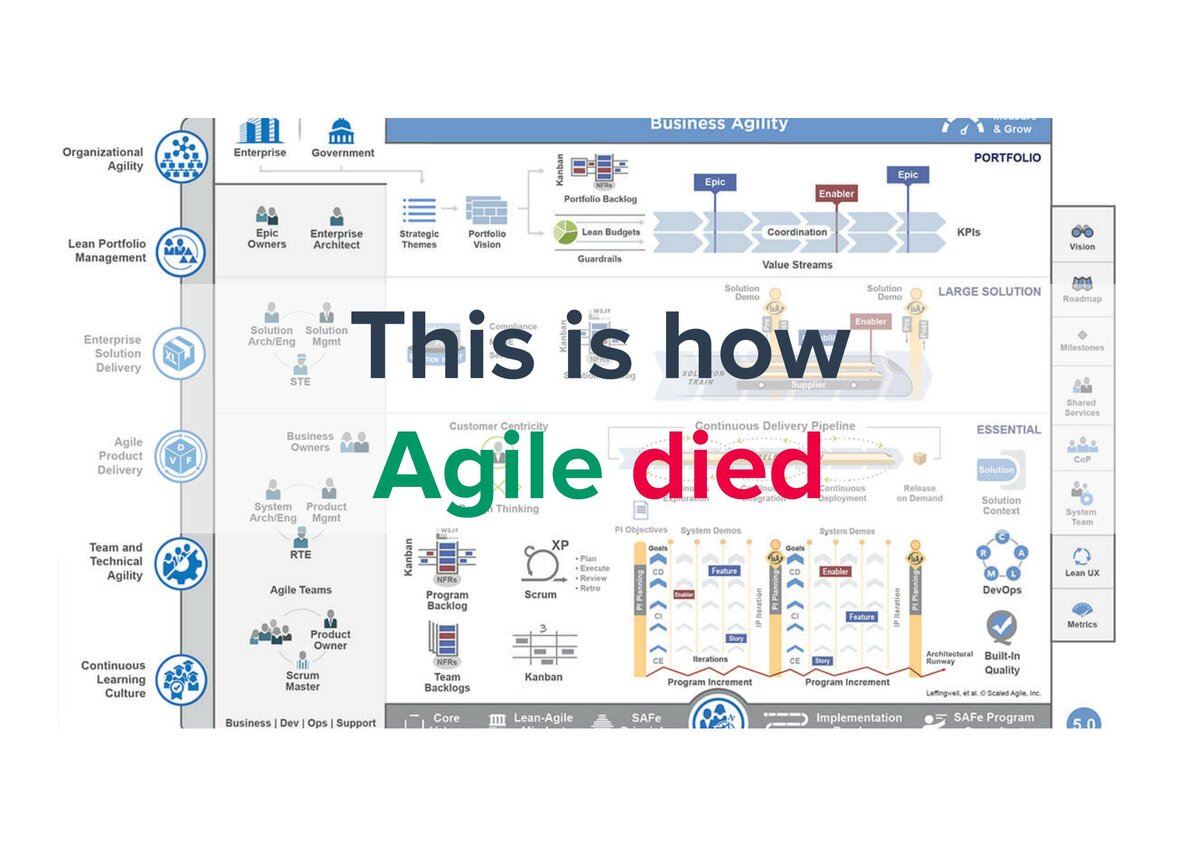
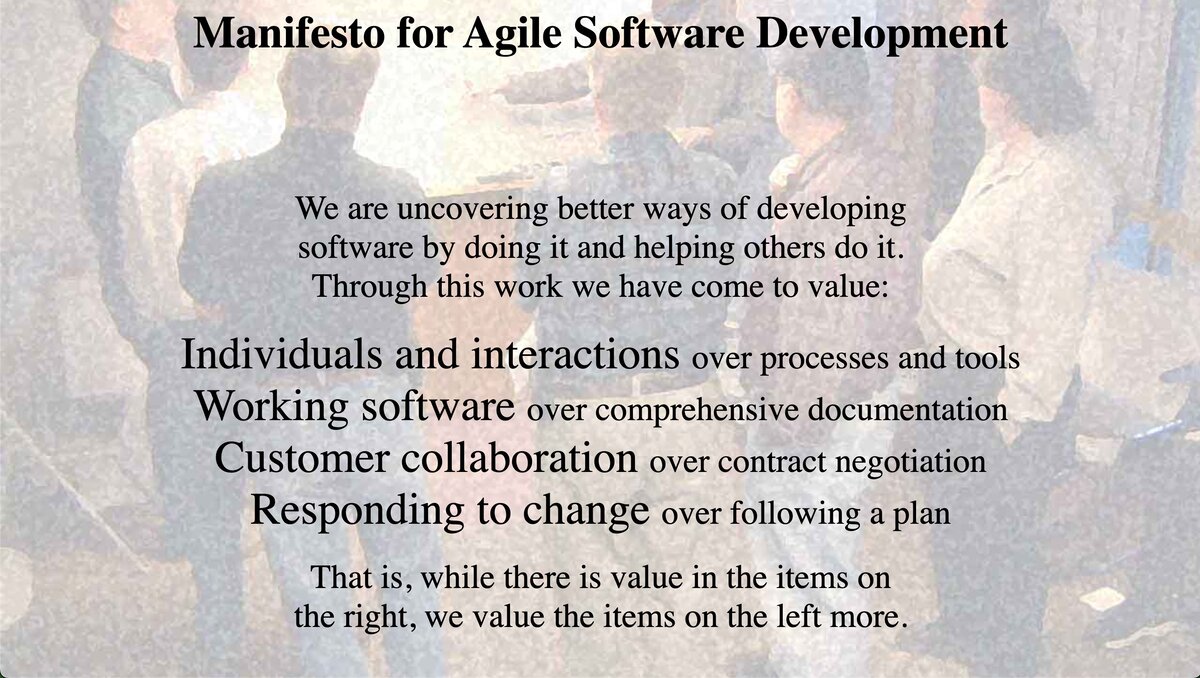
Something must've gotten very, very wrong …
Can we learn anything from that in the AI race age?
AI Impact = Fluency × Flow × Fit
Most AI adoption strategies invest in individual fluency of the so-called "individual contributors" and wonder why org-wide impact never lands. I came to realize there are three layers that multiply to produce the desired global effect.
Can you put AI to work in your own job, end to end?
The layer everyone's on right now and where almost the whole training budget goes. This is a necessary but not sufficient condition for success.
Can the work reach 'done' without a human becoming the bottleneck?
Pipelines, guardrails, reviews, tests — not a skill you learn individually, but a collective system you design.
Do your organizational structure & policies turn work into real outcomes, not just output?
When org design fits the strategy, local speed turns into global performance. When it doesn't, you just make the wrong thing faster.
These three layers multiply and the weakest one sets the ceiling.
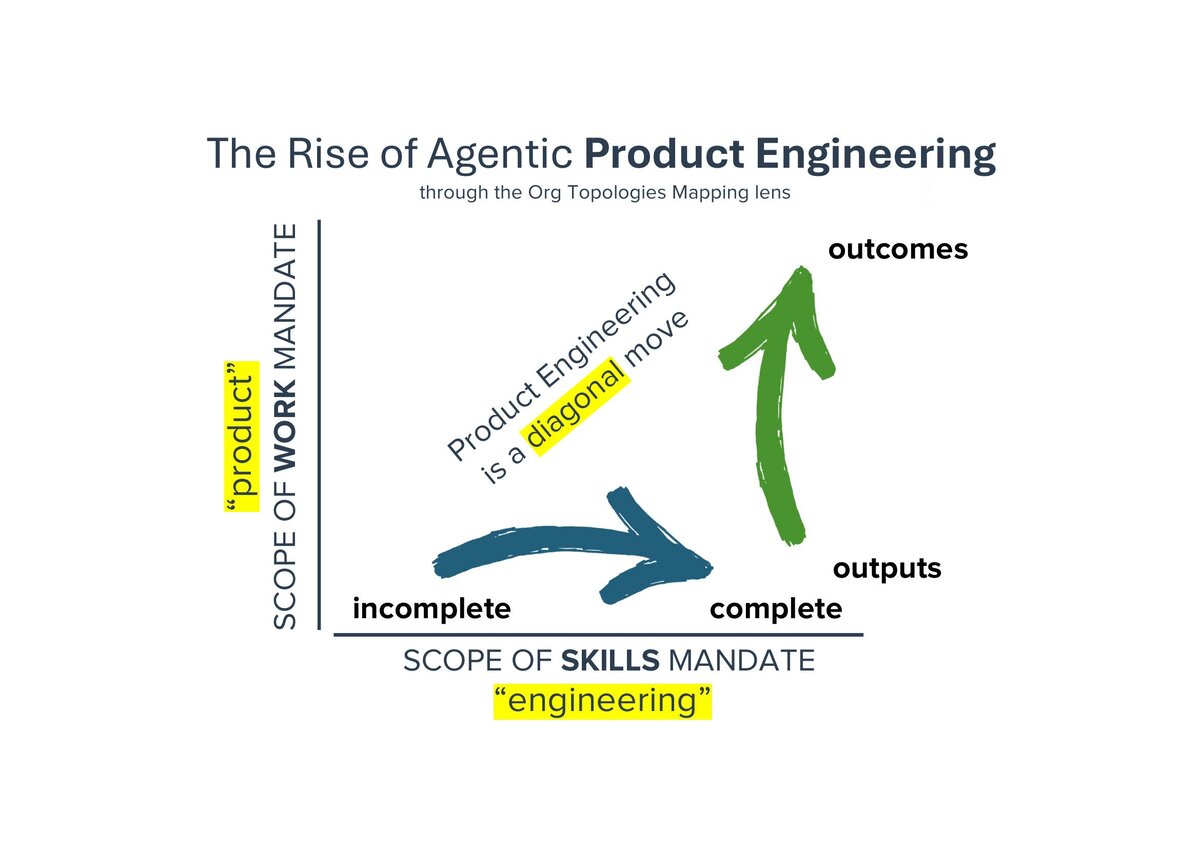
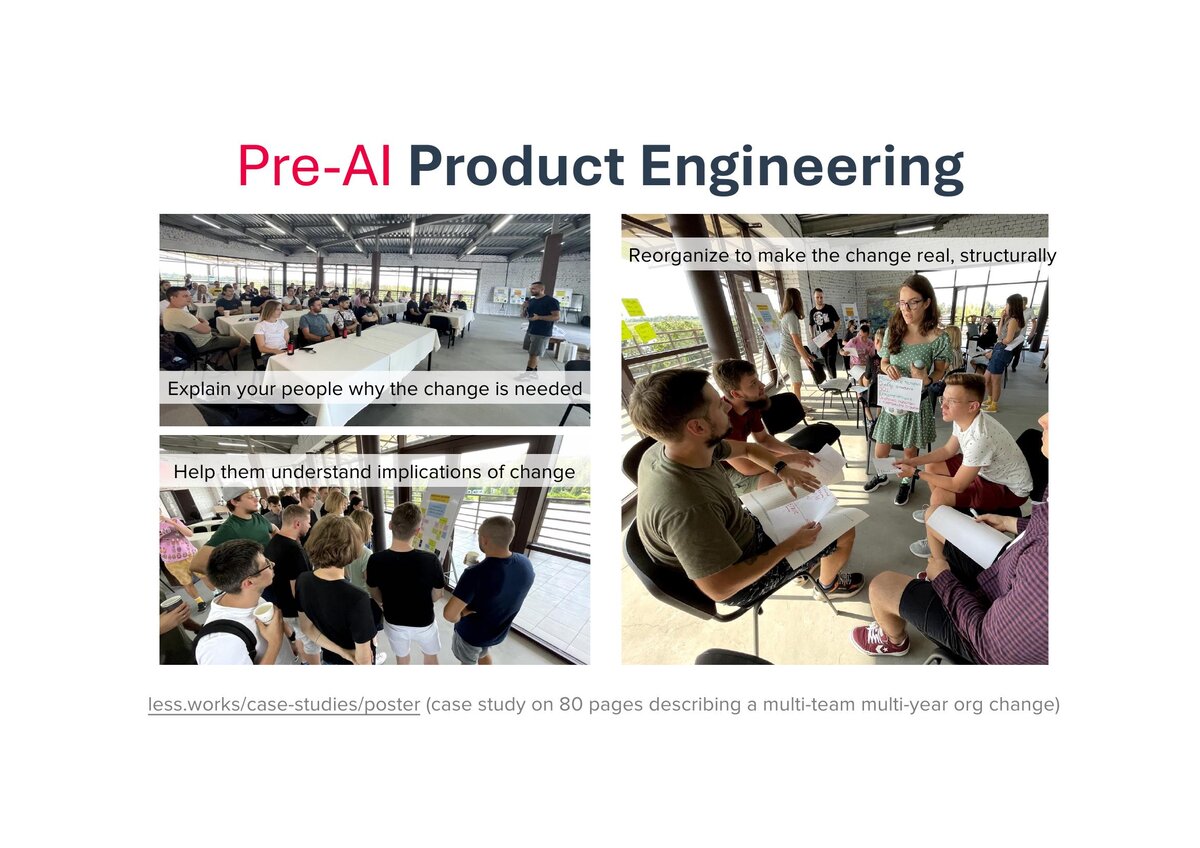
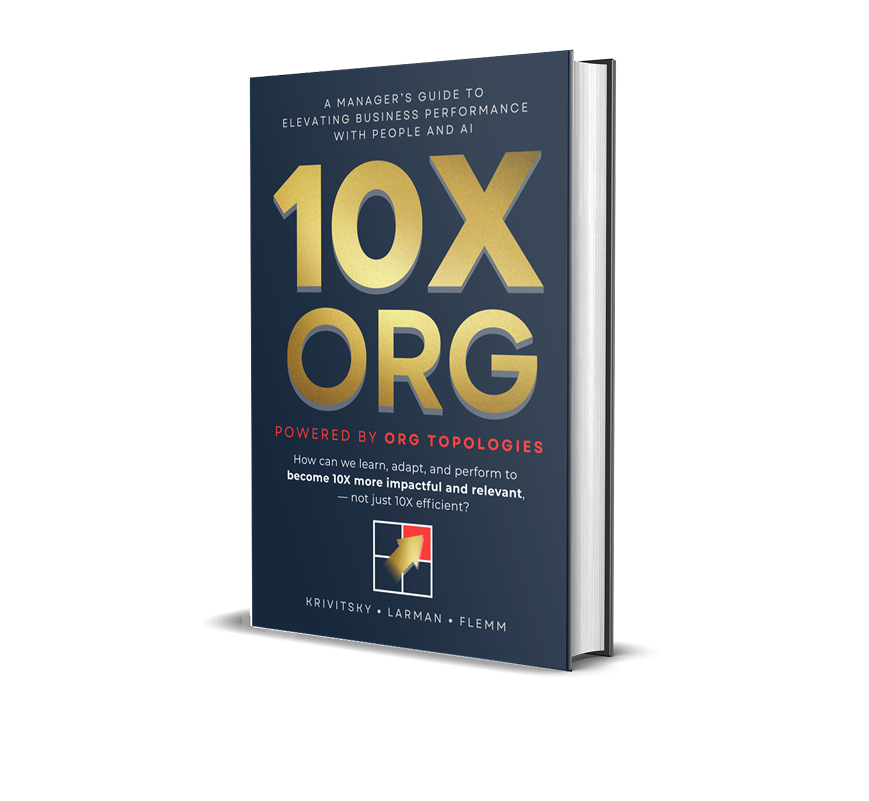
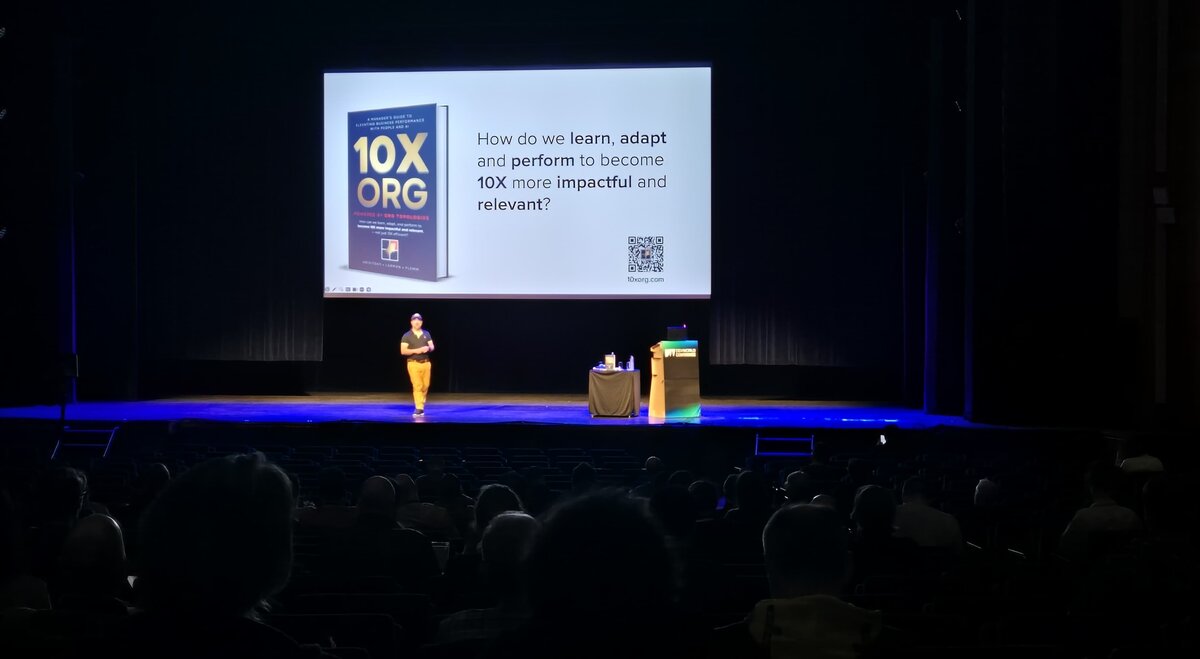
How do we learn, adapt and perform to become 10X more impactful and relevant?
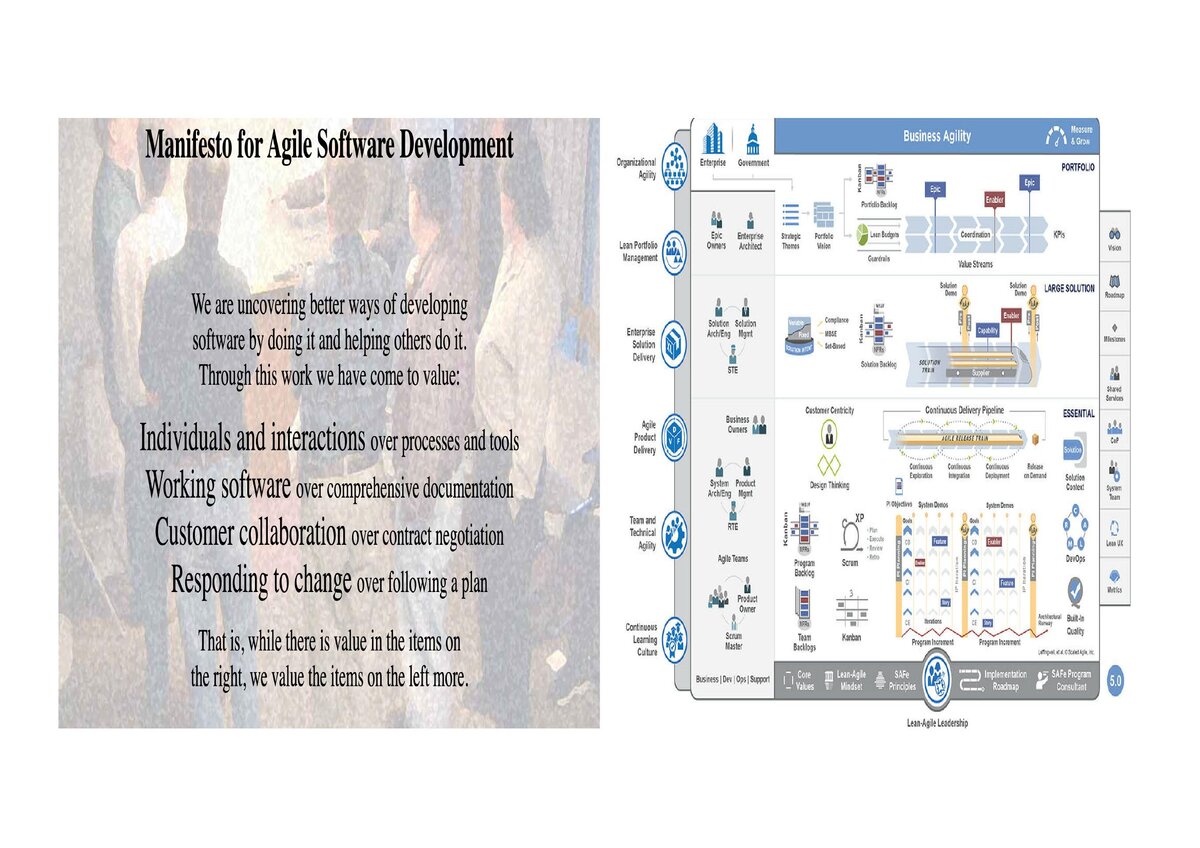
Something must've gotten very, very wrong …
So let's learn and try avoiding.
Any guesses?..
The "Intellectualization" Trap: We often equate complexity with sophistication, intelligence, or expertise.
Impression Management: Complex solutions are often viewed as more impressive by others, which can influence decision-making in corporate environments.
Search for Order: We often mistake chaos for complexity. When we face unpredictable situations, we may attempt to impose a complex, rigid order rather than accepting that the system may be fundamentally unpredictable.
Simple solutions often lack the satisfaction of a rich, nuanced narrative.
When a solution is too straightforward, it can feel dull or unfulfilling — even if it is the most efficient path forward.
- What are the things you might be overengineering, overthinking?
- Where can you go easier, leaner?
Breaking a law?
A complex system that works is invariably found to have evolved from a simple system that worked.
A complex system designed from scratch never works and cannot be patched up to make it work.
You have to start over with a working simple system.
- Release Trains
- Squads
- Tribes
- Chapters
- Scrum of Scrums
- Velocity
- PI Planning
- User Stories
- Servant Leaders
- Definition of Done
- Definition of Ready
- Backlog Grooming
- Agile Maturity Model
- …
Orgs attracted to new & shiny objects: fancy terms, models, frameworks …
- Agentic AI
- Context Engineering
- Vibe Coding
- Spec-driven dev.
- Skills
- Plugins
- Token maxing
- Feature Factories
- Agentic Engineering
- Harness Engineering
- Loop Engineering
- Eval Engineering
- …
Orgs attracted to new & shiny objects: fancy terms, models, frameworks …

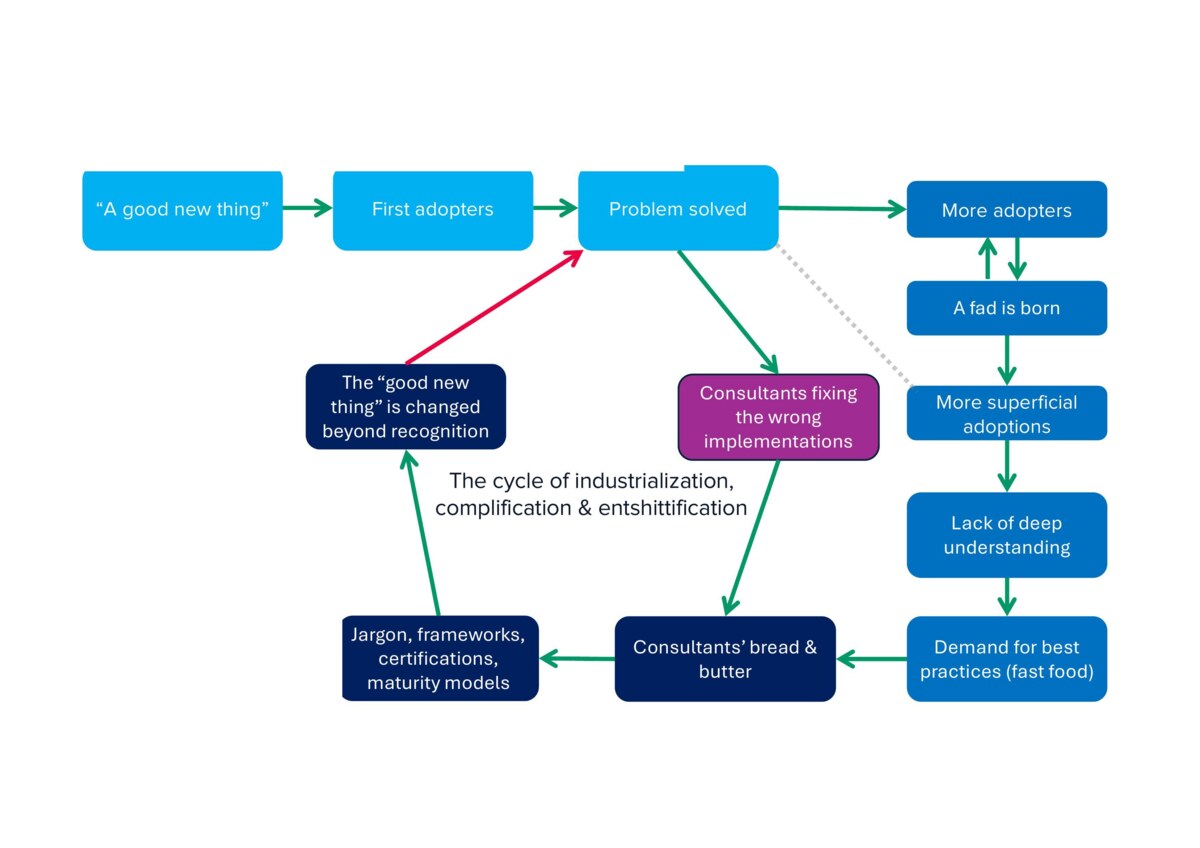
Cycles of industrialization.
- "Agile Theatre"
- "Agile without structural reinforcement"
- "Agile transformation as a project"
- "Centers of Agile Excellence"
- "Agile as internal IT game"
- "AI Theatre"
- "AI without structural reinforcement"
- "AI transformation as a project"
- "Centers of AI Excellence"
- "AI as internal IT game"
Park AI. Slow down. And think business and org development.
1) Park AI aside for a moment.
2) As an organization, what do we need to be better at to make our customers & business strive?
- Output Predictability — delivering consistently and reliably.
- Lead Times & Throughput — reducing waste, delays, improving flow.
- Specialist Expertise — maintaining deep skill and craft where it counts.
- Customer Value — delivering outcomes that truly matter to users.
- Adaptiveness — responding flexibly to change.
- Employee Engagement — sustaining motivation and satisfaction.
- Operational Reliability — ensuring stable day-to-day operations.
- Ideation and Innovation — generating and testing new ideas.
- Organizational Learning — continuously learning and improving.
- Resource Efficiency — using resources wisely, without excess.
Park "AI topic" aside for a moment.
Pick one primary org goal that you believe your org needs to focus on for its business & customers.
Close your eyes and see it as if it happened (own it!) — describe observable change.
Backpropagate your vision: what needs to happen next quarter, next month, next week, on Monday…
How AI comes into the picture? How can Agentic Engineering help accelerate that change?
And K.I.S.S.!
Thank you!
Alexey Krivitsky
Co-author of 10X ORG and co-creator of Org Topologies. Helps organizations rethink, redesign & rewire themselves for the AI era — from the codebase to the boardroom.

As a full-stack consultant, I operate across all three layers — AI Fluency, Team Flow & Org Fit. Talk to me to get a custom offer that matches your organization’s maturity to drive the impact.