Certified Org Topologies Consultant (C-OTC)
Opening of the Certified Org Topologies Consultant course — designing and elevating organizational performance in the age of AI, the first People + AI org change system.
Design and Elevate Organizational Performance in the Age of AI
Certified Org Topologies Consultant — the first People + AI management and org change system.
Welcome to a three-day course!
…which we do in only two days.
The Certified Org Topologies Consultant program equips leaders and consultants to design adaptable, high-performing orgs with the first People + AI org change system.
Process?
- Practice the OT method in a real environment
- Collect artifacts
- Produce an experience report
- Reach out to us
- 8:00 — Course content with break(s)
- 11:30 — Lunch
- 15:00 — Course content with break(s)
- 16:00 — Closing
- Photos, slides
- Slack access
- Vegas rule
- Post-class beer? Meetups?
- Other agreements?
You can follow the slides
- Org Topologies theory, approach, and models.
- …
- …
At your tables, invitation:
Share your frustrations with the org change, change theatre, state of agile adoption, AI …
- "Agile is dead" (and most developers hate Scrum).
- Org Design (OD) is not among performance management tools.
- Lack of common vocabulary for org change direction (incl. failed change).
- "Compulsive Framework Dependency Disorder."
- Many improvements focus locally (e.g., individual teams).
- Great ideas (e.g., LeSS, FaST) are not widespread as they deserve to be.
- …
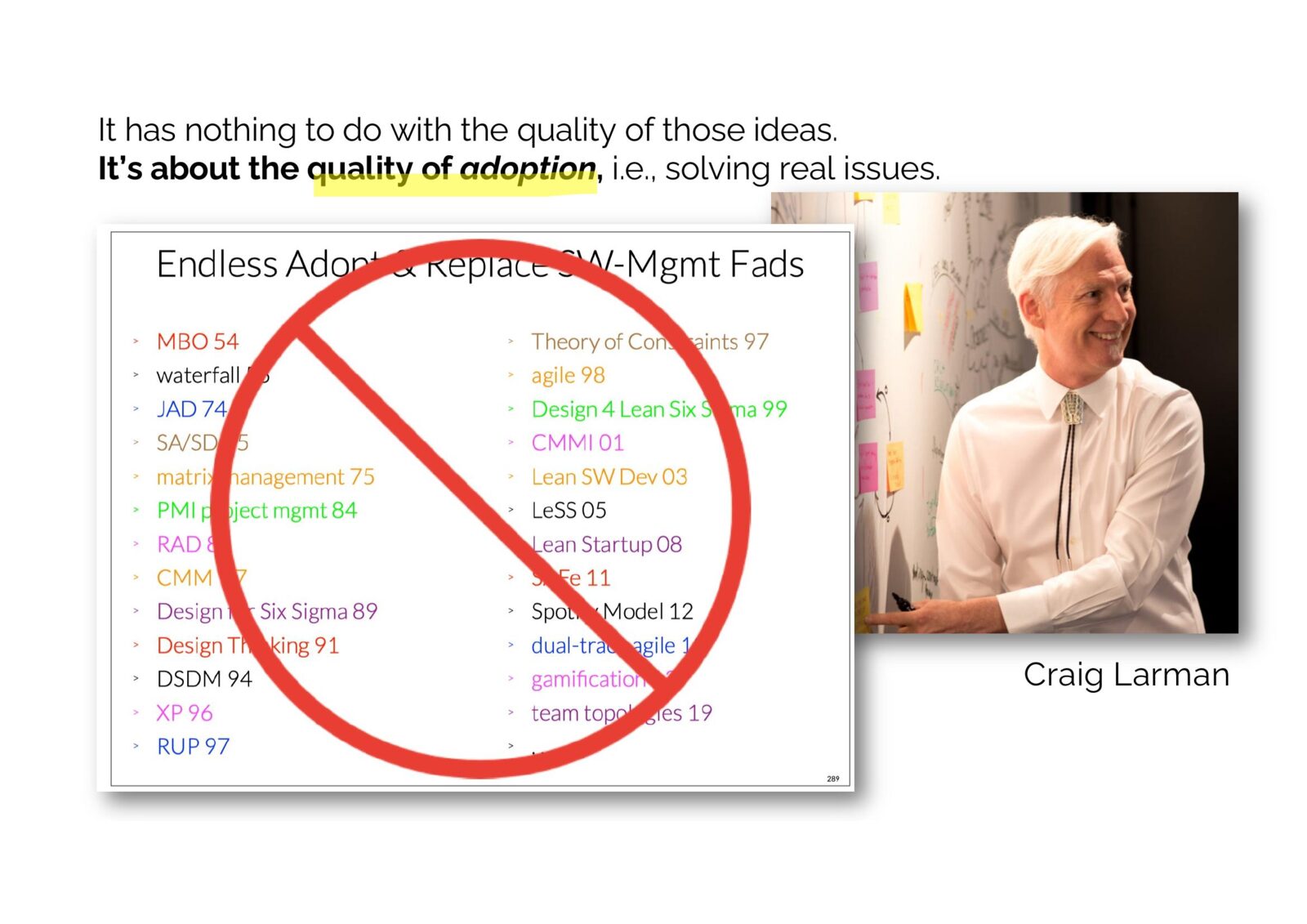
"I estimate that 75% of those organizations using Scrum will not succeed in getting the benefits that they hope for from it."
OD is to org change, what code is to software.
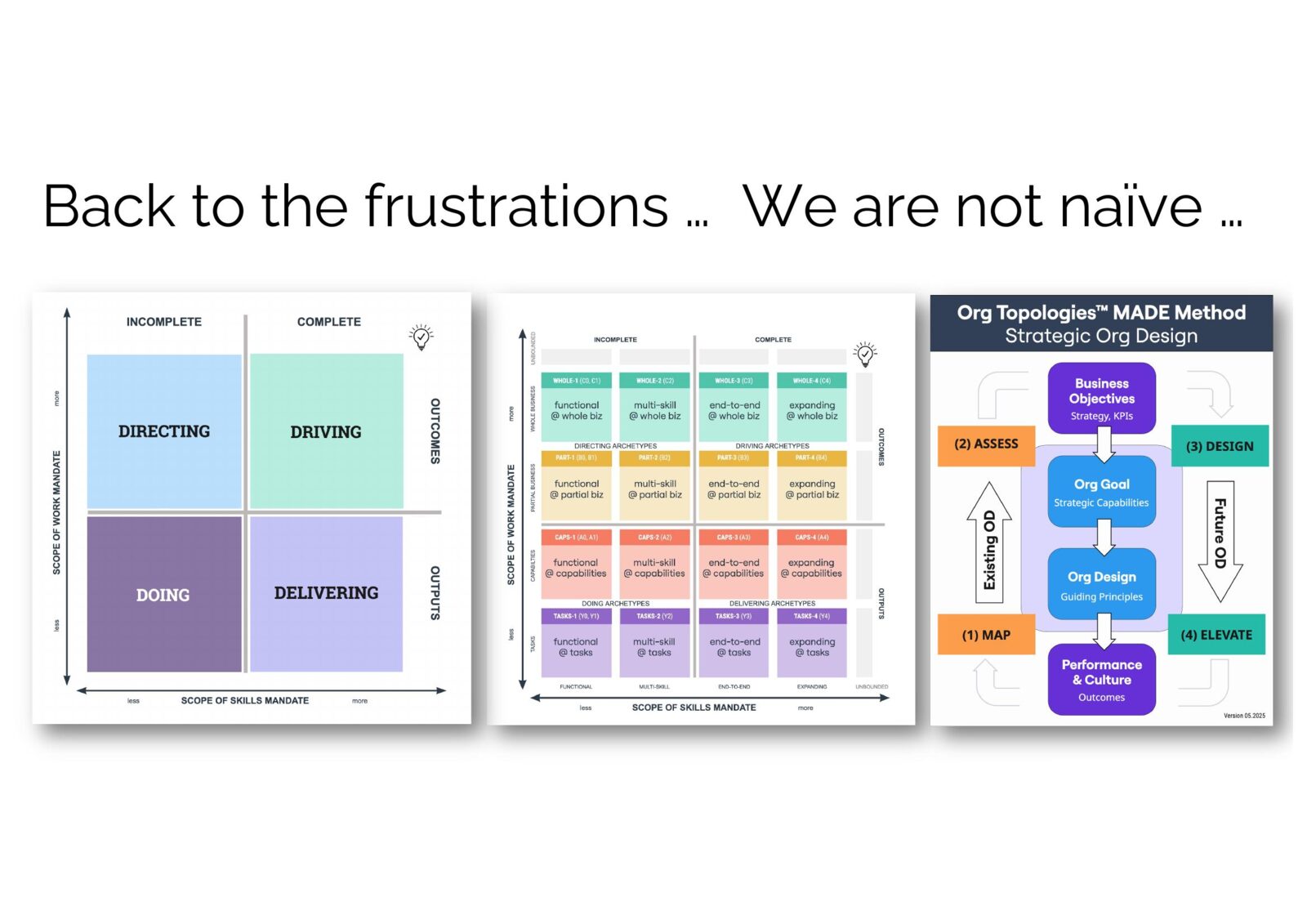
A way to think, see, and talk about the org design and org development —to get change going.
[Agnostic View]
OT helps leaders create fit-for-purpose organizations by aligning strategy and structure according to relevant optimizing goals.
[Agnostic View]
An org design system with a vector for creating adaptive orgs with people + AI.
[Primed View]
And then Craig "ruined" the party…
Any modern management method that ignores the accelerating progress of AI cannot be serious.
It is like ignoring computers 50 years ago.
People will be displaced, unless …
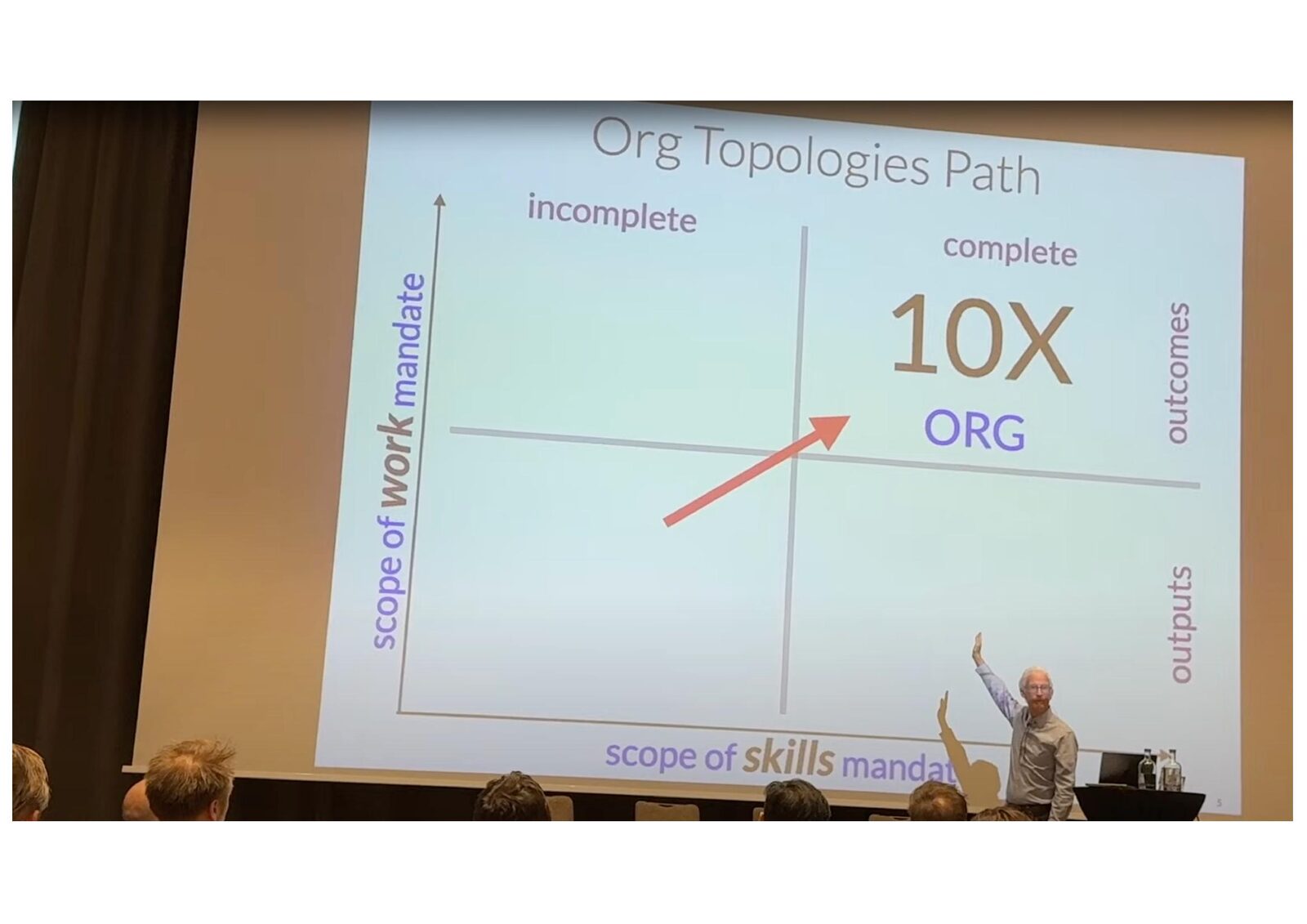
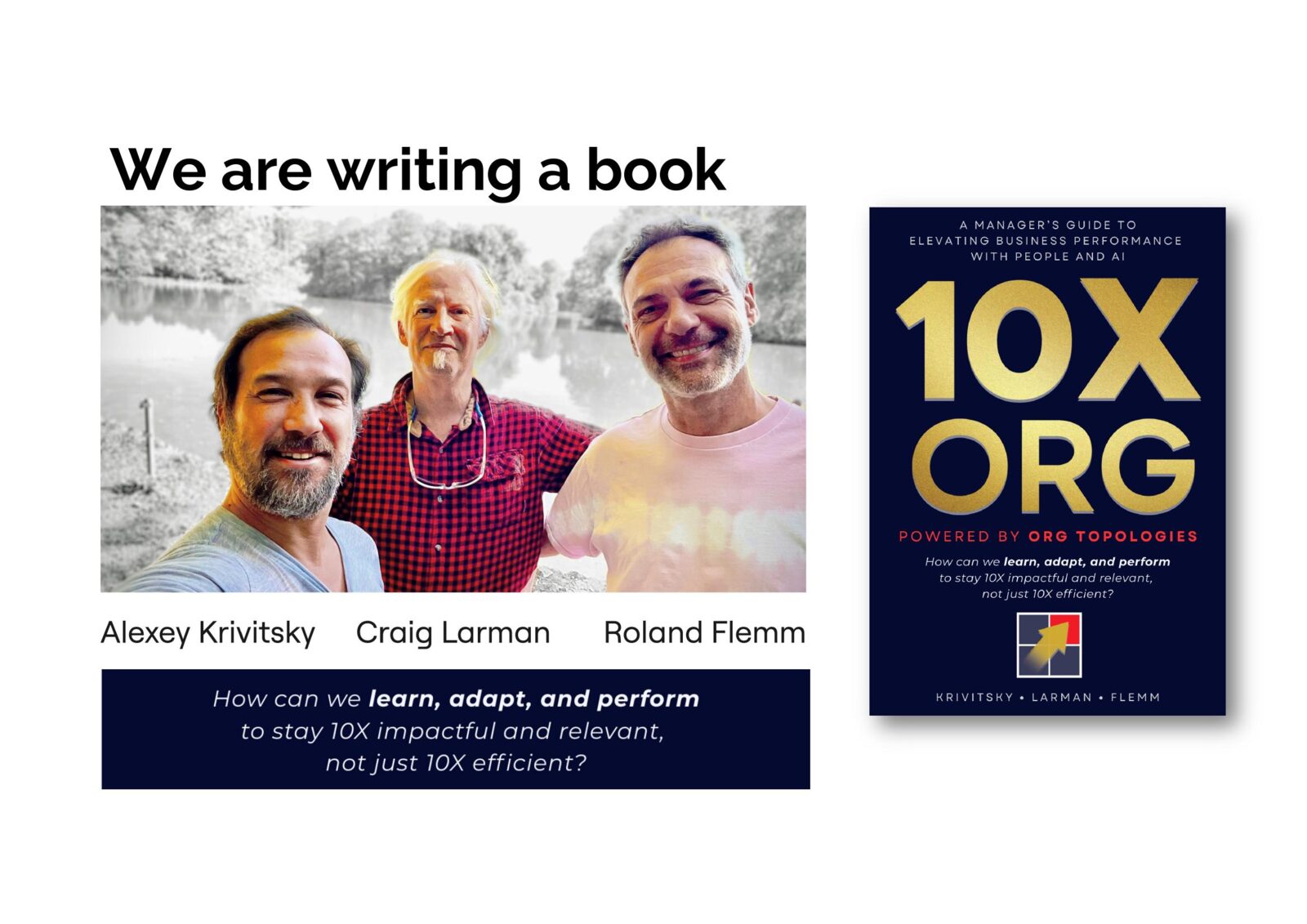
"There is no instant pudding."
Please, discuss: what might this mean?
Speaking of instant puddings…
- Org Topologies theory, approach, and models (to be cont.)
- A case of XYZ company (aka Hanna and Co.)
- …
Meet the Personas of the Case
HR Director
Strongly believes in relationships and people management as the foundation of org success. Had not been deeply involved in org design work at the company.
Senior Developer
High-performing developer, early AI adopter. Believes in experimentation and cross-boundary work using AI. Strong in frontend. Secretly experiments with going full-stack with GenAI.
Director of Engineering
Trusts in strong management and technology's ability to increase performance. Six months ago, he accomplished an IT transformation and streamlined the teams to own services.
Head of Product
A strong product person, outcome-focused. New to the company. In her previous job, she witnessed teams co-owning the whole product. She sees major downsides of the current approach of streamlining the teams.
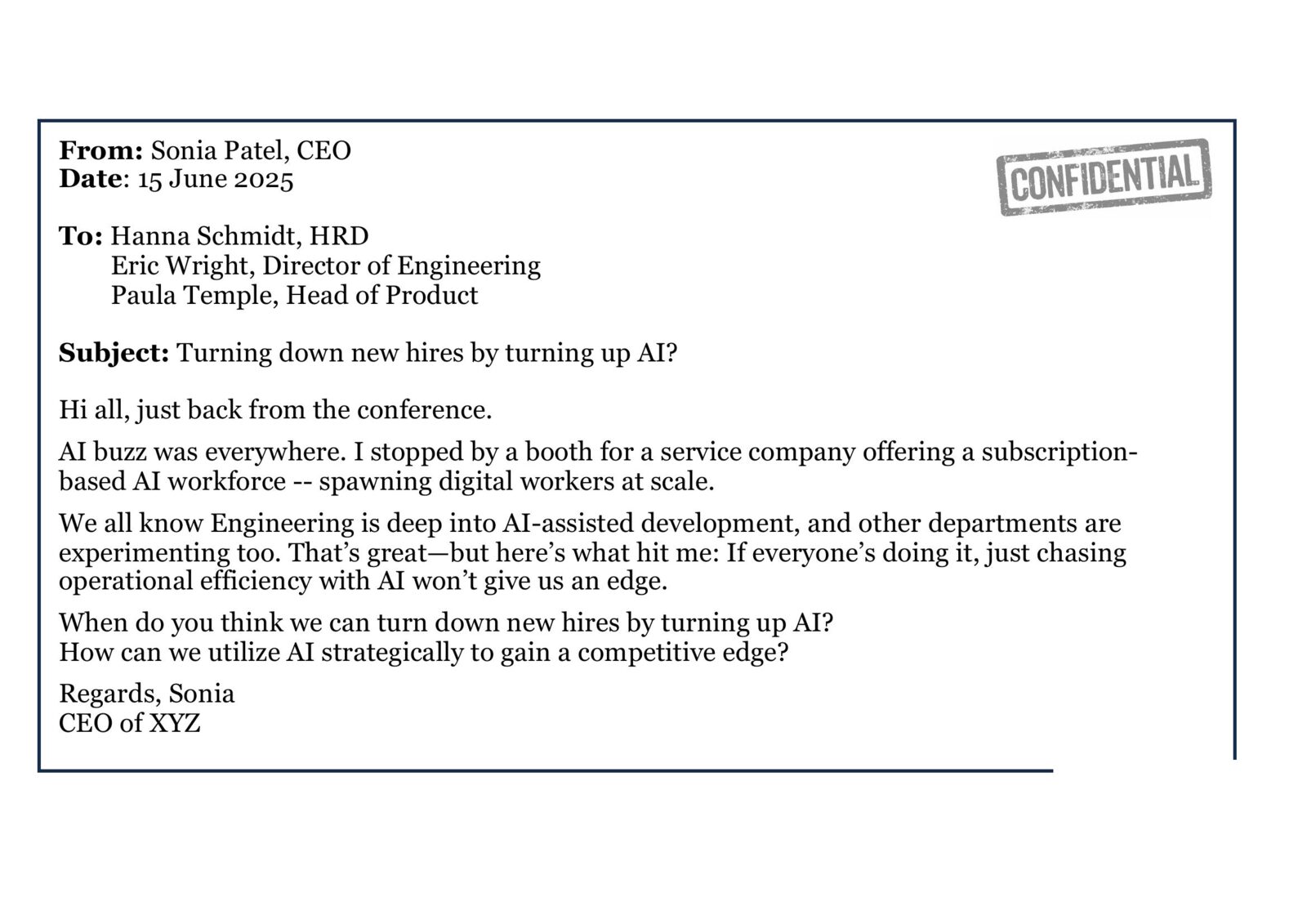
CEO>: "When do you think we can turn down new hires by turning up AI? How can we utilize AI strategically to gain a competitive edge?"
Pick a persona and empathize with him/her:
- What's your gut reaction to the CEO's email? (one word, a phrase)
- What pressure do you feel now—personally or politically?
- How does the call for "strategic AI" threaten or play into your current approach to success? Do you feel a conflict?
- What would need to change—around you or inside you—for you to respond with confidence?
Be realistic and capture key ideas on a flipchart.
Personas Having A Discussion
CEO>: "When do you think we can turn down new hires by turning up AI? How can we utilize AI strategically to gain a competitive edge?"
HR Director
Senior Developer
Director of Engineering
Head of Product
Engage in a discussion from your persona's position. Be yourself, be real.
How did it go?
- Biased?
- Locally-optimizing?
- Lacking a common vocabulary?
- Mixing primary and secondary concerns?
- Likely, the agreements (if done) won't last long.
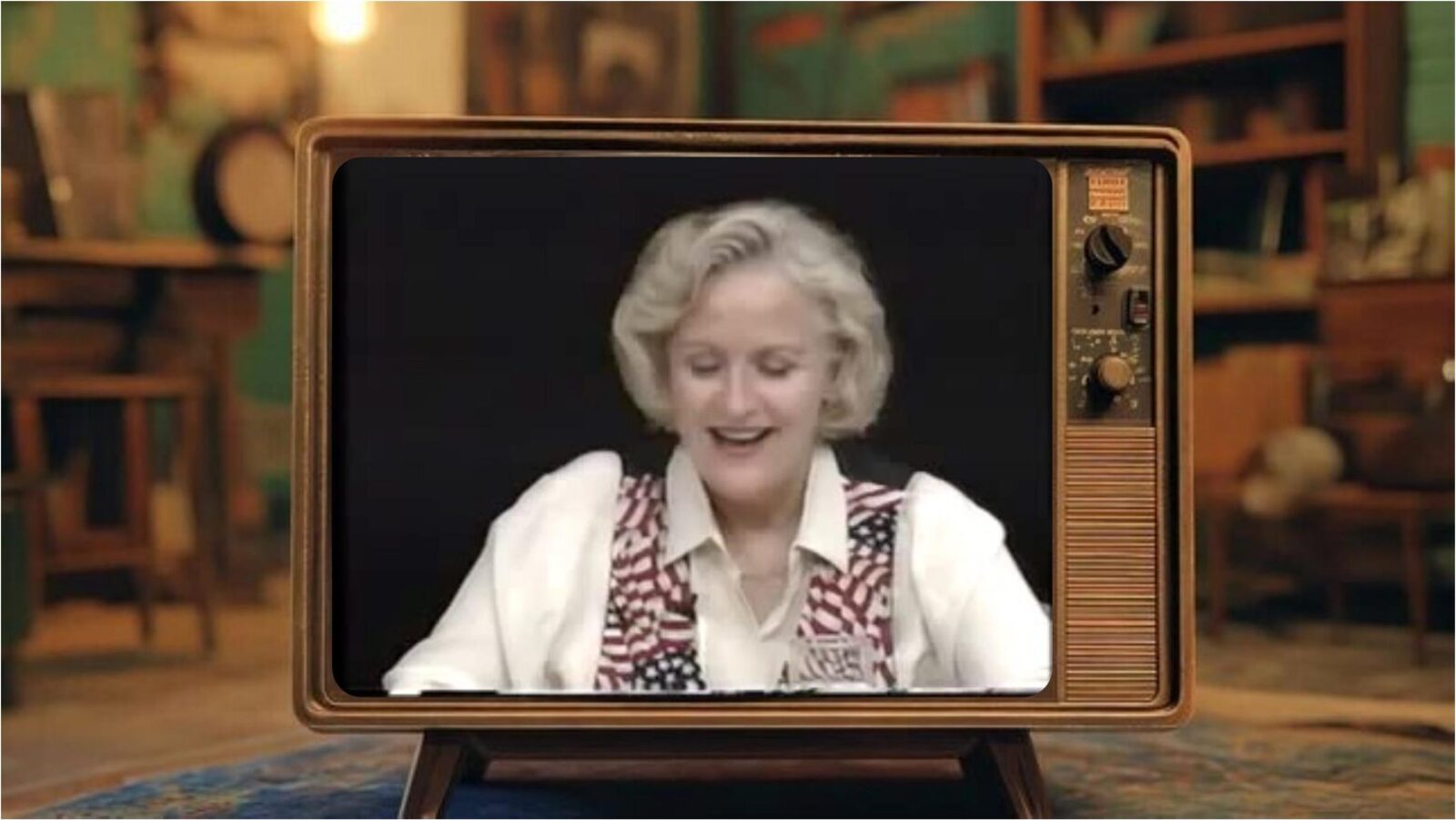
"If we have a system of improvement that's directed at improving the parts taken separately, you can be absolutely sure that the performance of the whole will not be improved."
"The performance of a system depends on how the parts fit, not how they act."
"Improving a system means focusing on the outcomes of the whole—not just fixing individual parts or removing defects."
Org Topologies offers a systemic & strategic approach for org change.
- Org Topologies theory, approach, and models.
- A case of XYZ company.
- Working on improving your organizations.
Learning by doing: apply Org Topologies in your context.
- You will be practicing all the concepts taught in this class on a real org that you know well.
- By the end of the class, you will have an improved org design and ideas on how to get the change going.
- Now, please decide whether you will work individually or in a small group on a shared company context throughout this whole class.
Write on post-its or on the board:
- The company name (or pick a codename)
- The industry and market it operates in
- Customer segments
- The company's business ambitions and strategy (how to get there)
- Org Topologies theory, approach, and models.
- A case of XYZ company.
- Working on improving your organizations.
Systemic Approach for Org Change
"For the successful execution of an organization's strategy, it is essential that its structure and operating model are aligned with strategic goals and work processes—strategic alignment."
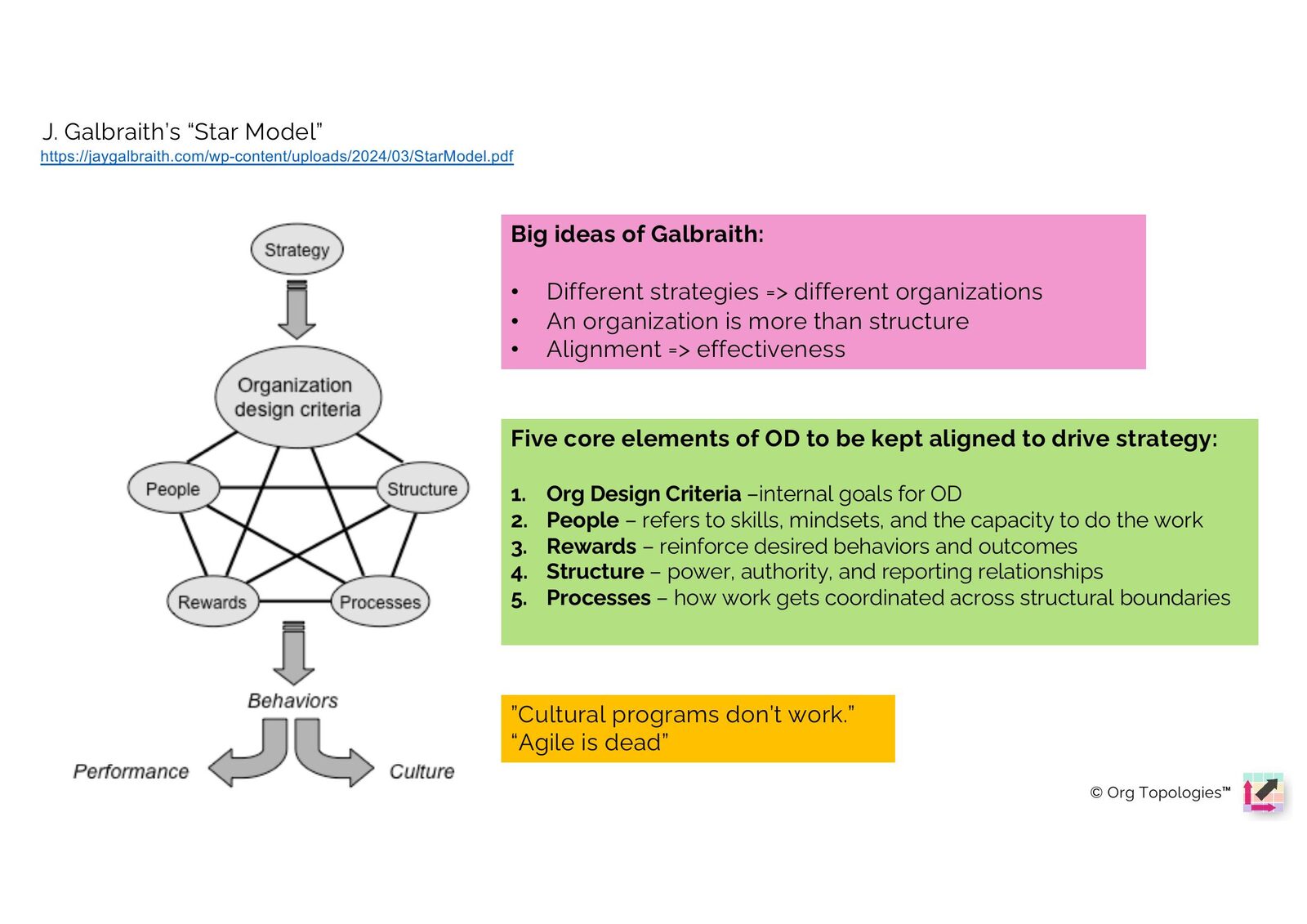
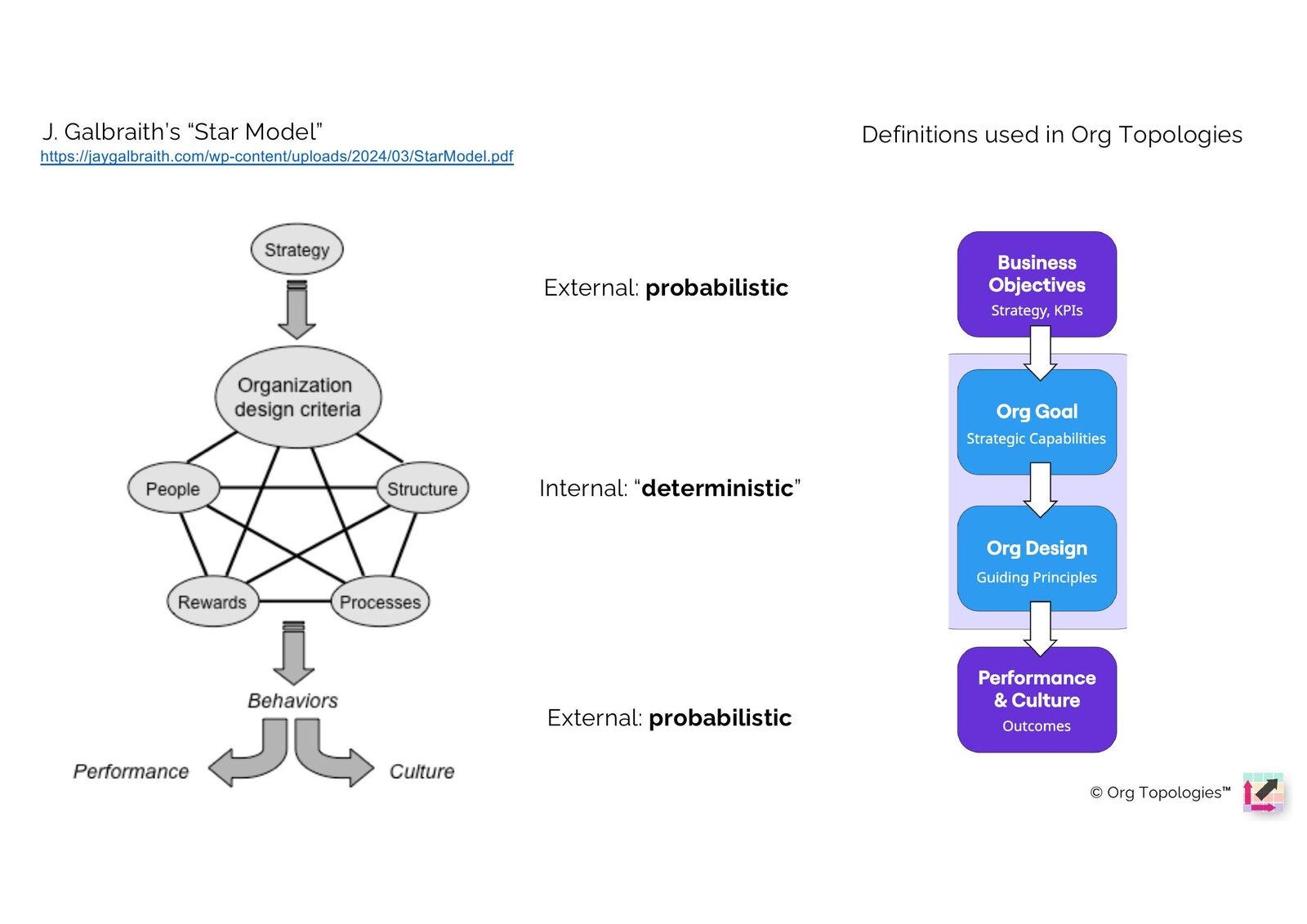
GIVEN: Executives say: "We will be developing a very competitive product ABC. We will operate with a high level of confidentiality to safeguard our R&D from risks such as employee poaching, bribery, or breaches of our information systems."
ORG DESIGNER'S TASK: At your tables, come up with a coherent OD that will be fit for purpose here. Consider structures, processes, people, rewards…
Bad news!
There is an existing OD.
"All organizations are perfectly designed to get the results they get."
If we want different results? Then we need to reorganize.
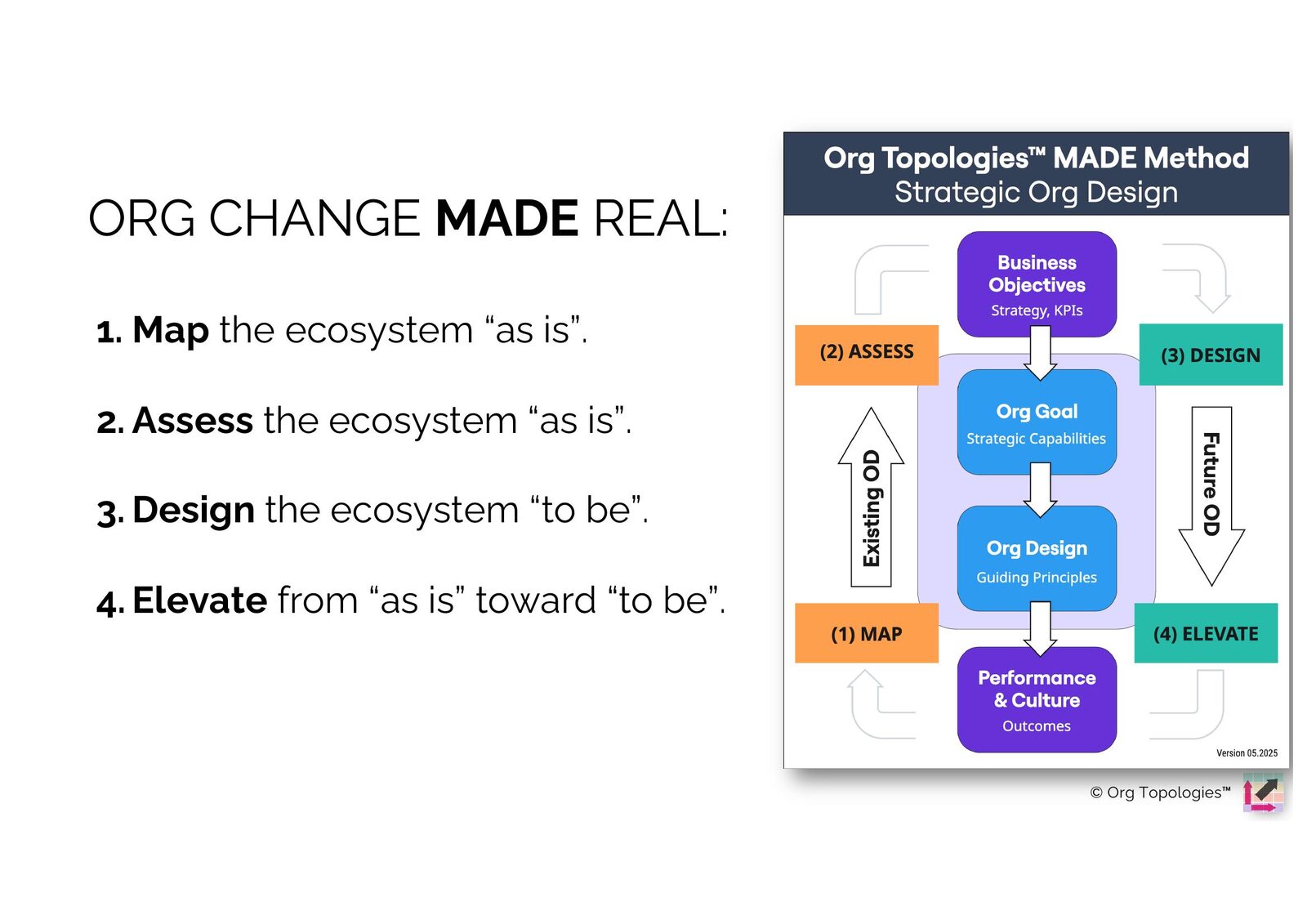
Remember how this was going?
What is the OT Consultant's stance?
CEO>: "When do you think we can turn down new hires by turning up AI? How can we utilize AI strategically to gain a competitive edge?"
OTC> Hold on…
PREP: OTC> So, what are your business objectives and strategy? OTC> Which goal do you need to optimize for?
MAP-ASSESS: OTC> Now let's study your real org to test its fitness. OTC> What's the need for change?
DESIGN-ELEVATE: OTC> What will have to change? OTC> How can we get the change going?
- output predictability
- resource utilization
- lead times & throughput
- customer value
- adaptiveness of product (service)
- specialist expertise
- costs efficiency
- organizational learning
- innovation & ideation
- adaptiveness of the portfolio
- employee engagement, happiness
- internal stakeholder satisfaction
- confidentiality
- compliance
- product (service) quality
- operational reliability
Please write down these 16 goals for your table's poster. Use Post-Its, one goal per note. More exercises on these goals are coming.
Personas Having A Discussion
CEO>: When do you think we can turn down new hires by turning up AI? How can we utilize AI strategically to gain a competitive edge? Org goal: And we need to get more adaptive and outlearn our competitors.
HR Director
Senior Developer
Director of Engineering
Head of Product
How did this discussion turn out differently with a clear Org Goal?
- Org Topologies theory, approach, and models.
- A case of XYZ company.
- Working on improving your organizations.
Add to your wall:
- Which desired org goal(s) will support the business?
- Use the list of 16 goals above as an inspiration.
- Less (goals) is more.
- Org Topologies theory, approach, and models.
- A case of XYZ company.
- Working on improving your organizations.
Pick one or two high-priority biggish work items (initiatives, projects).
Draw a visual model of how work is done and flows in the current organization -- "from concept to cash".
Include key work units involved:
- Individuals
- Groups
- Teams
Be specific:
- Name the units
- Specify number of people in each
Let's Walk the Map!