Agile Transformation Will Not Be Televised
TL;DR:PowerPoint-driven agile transformations produce change theater, not real change. Making slides and making decisions require different skills. Instead: find pockets of agility already working, agree on a single broadly defined product, build a real 100% product organization around it, and keep improving. Deep and narrow beats broad and shallow.
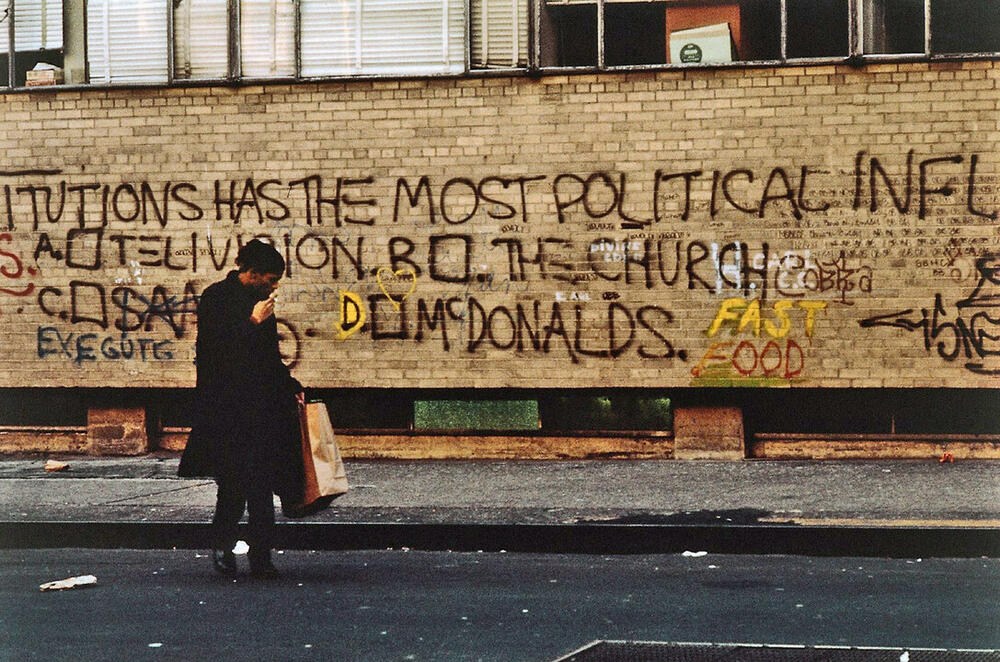
"You will not be able to stay home, brother. You will not be able to plug in, turn on and cop out. You will not be able to lose yourself on skag. And skip out for beer during commercials, because — the revolution will not be televised."
— from "The Revolution Will Not Be Televised" by Gil Scott-Heron
Agile transformations don't exist (in foresight)
I mean it. And it is true. At least partially. Let me borrow 3.5 minutes of your time to explain myself.
Many organizations right now (as you are reading these lines) are spending a huge amount of time preparing slide decks and roadmaps to lay down their plans for the upcoming "agile transformation". That's a PowerPoint-driven transformation. It won't be televised.
In most cases, if you visit those places and ask around, no one really can explain in simple language what exactly is to be transformed, how, and what's important — at what costs. It takes no balls to send PPT decks around. The opposite is true for real transformational decisions — like, for instance, dismissing the project management office. I've seen so many PPT-driven transformations leading to nothing because of a lack of real management will and courage to make strong decisions. Again — making slides and making changes require different skills.
In some cases (banking, telecoms) these "transformational projects" come down from the parent companies, in a form: "thou oughtest get transformed, within 3 months, and by the way, here's the paid consultant with a slide deck to teach you how".
My personal experience over the last years (being that paid consultant) while trying to help several large financial and automotive institutions: that top-down, lack-of-leadership, slides-driven approach just doesn't work. It creates a lot of confusion, and actually — from my experience — it will 100% guarantee a lack of any real transformation, but nice-looking slides.
It is such a commonly observed theme that we consultants even came up with a name for it: "an agile theater", or more broadly "a change theater".
An "agile transformation" — a.k.a. a "change theater" — done as a project (with goals, budgets, deadlines) misses the whole point of creating a culture of continuous improvement. This is Human Framework Dependency Syndrome in action — hoping a slide deck will solve your problems. The project will get finished, the budget will get spent, the managers will get their dreamt-of promotion (or fired and re-hired). But hey, nothing changes really. SAMO.
Deep and narrow over broad and shallow
That's it. Instead of going big (doing a "transformational project") and ruining the whole idea of people taking proactive steps to improve their working life — which is the heart of the agile movement — stop, breathe, think, and take it slow.
Here is one million dollars worth of consulting advice for you, for free:
- Find the pockets of agility you already have. Figure out what already works in your organization by finding the "pockets of agility" and the signs of true change leadership happening. That's your goldmine. Any large functioning complex system started with a small functioning system. Find the small good seeds of agility before planting a large garden.
- Agree on a single, broadly defined product. Something important that enables your business in some aspect. This can be a product serving a revenue stream or a business line. Or a particular service offered to a given customer segment. You name it — find it and agree to work all together to improve it.
- Build a real, 100% product organization around that product (the deep and narrow principle I admire) — starting with good old plain-vanilla Scrum. For a real-world example of how this plays out, see the LeSS adoption at Poster POS. But instead of scrumming with several teams in parallel, treat all the engineers involved plus their stakeholders as a single product team doing Scrum. Focus on quality and customer value. Engage a coach or consultant with deep know-how on product development work. Invest in the culture of doing it right from the beginning. That's transformational.
- Keep improving. And God forbid calling it an "agile transformation".
Liked this line of thought? Check out the Large-Scale Scrum adoption principles.
Yet, the agile transformation exists — but only in retrospect
And while doing the four steps above, you are actually doing real deep change on multiple levels at the same time. With AI now in the picture, the urgency is higher than ever — agile was the homework, AI is the assignment. And that's the best there is.
Looking back, of course, your followers would say: "Hey, that was an agile transformation!"
But you'd just shrug your shoulders, make a funk move, and sing:
"The revolution will not be televised. The revolution will be live."
Alexey Krivitsky
Co-author of 10X ORG and co-creator of Org Topologies. Helps organizations rethink, redesign & rewire themselves for the AI era — from the codebase to the boardroom.

As a full-stack consultant, I operate across all three layers — AI Fluency, Team Flow & Org Fit. Talk to me to get a custom offer that matches your organization’s maturity to drive the impact.